Use the first visit to decide whether a used car is worth an independent pre-purchase inspection. Start with the VIN and title information, walk around the car in daylight and take a normal test drive with permission. A vehicle history report helps you ask better questions, and a mechanic can see problems a report may miss.
| During the visit | Keep for the decision |
|---|---|
| Paperwork review | VIN match, title status and written warranty or as-is terms. |
| Walkaround and test drive | Warning lights, noises, visible wear and any seller explanation. |
| Independent inspection | Written findings and a near-term repair estimate. |
Match the car to the paperwork
Compare the VIN visible on the vehicle with the listing and title or dealer paperwork. Read the FTC Buyers Guide when buying from a dealer and check what it says about warranty coverage or an as-is sale. Ask for promises in writing. An NMVTIS report from an approved provider can help you check title and salvage history, and NHTSA offers a separate open-recall lookup.
Check mileage on the car and compare it with service records and the history report. Unexplained discrepancies, a seller reluctant to show title paperwork or a refusal to let a mechanic inspect the car are reasons to slow down.
Look for clues, then drive normally
Check the tires for uneven wear, compare panel gaps and look for obvious leaks or water staining. Try common controls such as the AC, lights and windows. Observe the dashboard at startup and after the engine is running. Ask the seller to explain any warning.
On a normal legal-speed test drive, note noises, braking feel, steering and shift behavior. Tell the mechanic if you hear a scrape, see a warning or smell something unusual. A smooth short drive cannot rule out problems that appear after extended use or under different conditions.
Make the inspection a condition of the deal
Choose an independent shop and ask for a written report with near-term repairs and an estimate. On a hybrid or EV, ask what the shop can actually verify about the high-voltage battery and charging. On a conventional car, ask about leaks, tires, brakes and any model-specific service due soon.
Compare the asking price plus immediate repairs against an alternative vehicle. A car with a lower sticker price can cost more once tires, deferred service and repairs are included.
What to check on a cold start and test drive
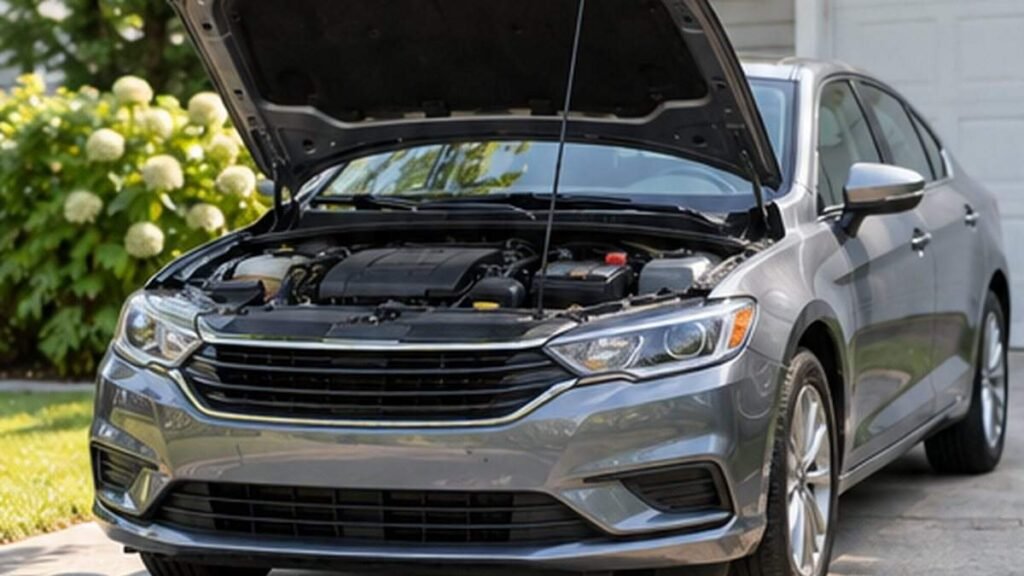
When you book the visit, ask the seller to leave the engine off until you arrive. If it is already warm, ask when it was last driven. On a gasoline car, watch how readily the engine starts, listen for a rattle that keeps going, and note any warning that remains after startup. Ask the mechanic to look into persistent smoke, a rough idle or a strong fuel smell. Skip the drive if the car shows a serious warning or feels unsafe.
- Before moving: Check the seat belts, mirrors, lights and controls. Look for fresh drips from beside the car. Check whether the tires have obvious damage and whether the seller can show where the spare or inflator kit is stored.
- In a quiet lot: With permission, try reverse, then drive, and pay attention to any long delay or hard jolt when the car goes into gear. Try a few ordinary turns and stops. Listen for clunks and notice whether the brakes feel consistent.
- On a normal road: Drive at legal speeds on a route both of you agree on. Note a vibration, a recurring noise or a pull that appears during ordinary braking. Keep both hands on the wheel and let the mechanic reproduce any symptom that would be unsafe to test yourself.
- Back at the lot: Note any new warning lights, smells or visible leaks. Write down when each issue showed up, such as “shakes only when braking from 35 mph.” Give that note to the shop.
When to pause or walk away
A VIN mismatch, unclear ownership paperwork or a seller who refuses an independent inspection is enough reason to stop the deal while you verify what happened. Treat an unresolved safety defect, unexplained flood clues or pressure to pay before seeing the paperwork the same way. Worn tires with a written estimate may be a budgeting issue. An unexplained warning light still needs a diagnosis before you know what to budget.
Ask the mechanic to separate work needed before regular driving, work likely due within the first year and ordinary wear to monitor. Get estimates for the first two groups. Put them beside the written out-the-door price for a dealer sale, or beside your estimated taxes and registration fees for a private sale. Then compare what each car would cost you in the first year.
A two-car comparison
Imagine the first car is priced $700 lower and needs $900 in tires and overdue service. If the second needs $100 of immediate work, the first starts $100 higher after those repairs. Use each mechanic's actual estimate and include registration or dealer fees when comparing final totals.
What should I ask the seller before the appointment?
Request the VIN, the current title status and permission for an independent inspection. Ask whether the seller has the service records and whether the car has open recalls. These answers help you decide whether a trip is worth your time.
Sources
Featured and Web Story visuals are AI-generated editorial illustrations.