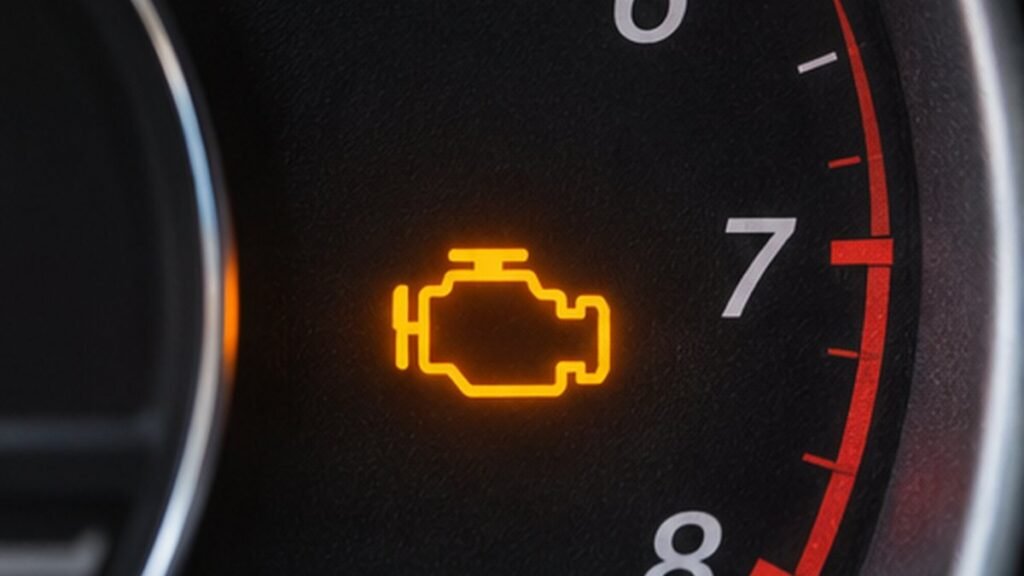
A check engine light that flashes while you drive calls for immediate attention. Ease off the accelerator, pull over as soon as you can safely do so and follow your owner's manual. If the car runs rough, loses power or shows another urgent warning, shut it down and arrange assistance. A steady light with otherwise normal operation usually leaves more time to contact a shop, but the manual and symptoms guide the decision.
| Dashboard behavior | What to do next |
|---|---|
| Flashing while driving | Ease off, pull over safely and follow the manual. |
| Steady with normal operation | Record conditions and arrange a diagnosis. |
| Engine light with a red pressure or temperature warning | Treat the additional warning as urgent. |
Look at the whole dashboard
Check whether the message is the amber engine icon or a separate red oil-pressure or temperature warning. If a serious warning accompanies the engine light, treat the situation as urgent. You might also smell raw fuel or feel violent shaking, which is useful information for roadside assistance. Make notes after parking.
A flashing engine light can indicate a severe misfire. Unburned fuel can damage the catalytic converter. A flashing warning that turns steady is worth reporting because the sequence gives a technician more information than the light's current state.
What to do with a steady light
If it appeared after refueling, check the cap when safely parked, provided your vehicle uses one. Follow the manual's tightening instructions. If the light persists, arrange a diagnosis. Try to remember if the warning appeared after a fill-up, on a hill, during a cold start or after a repair.
An OBD-II reader can retrieve a code. Save the exact code, along with any freeze-frame information available. The code describes a system or condition the computer detected. A parts order requires further evidence. For example, a misfire code on one cylinder can lead the shop to inspect ignition, fuel delivery and mechanical condition.
Give the shop usable details
A helpful note might say “steady light appeared after a highway climb at about 55 mph, no shaking, code recorded before clearing.” Leave codes and freeze-frame data intact until the shop sees them. If the warning changes to flashing or the vehicle begins to run badly, follow the urgent warning guidance and pull over safely.
What if the light goes away?
Keep your notes. The computer may have stored a code even after the light turns off, and an intermittent fault can return under the same conditions. If you need an emissions test soon, ask the shop about readiness monitors before anyone clears codes or disconnects the battery.
Should I clear the code to see whether it returns?
Save it and let the technician decide when to clear it. Onboard monitors record conditions that help explain why the fault set. Clearing can remove those clues and may leave emissions readiness monitors incomplete before an inspection.
Sources
Featured and Web Story visuals are AI-generated editorial illustrations.