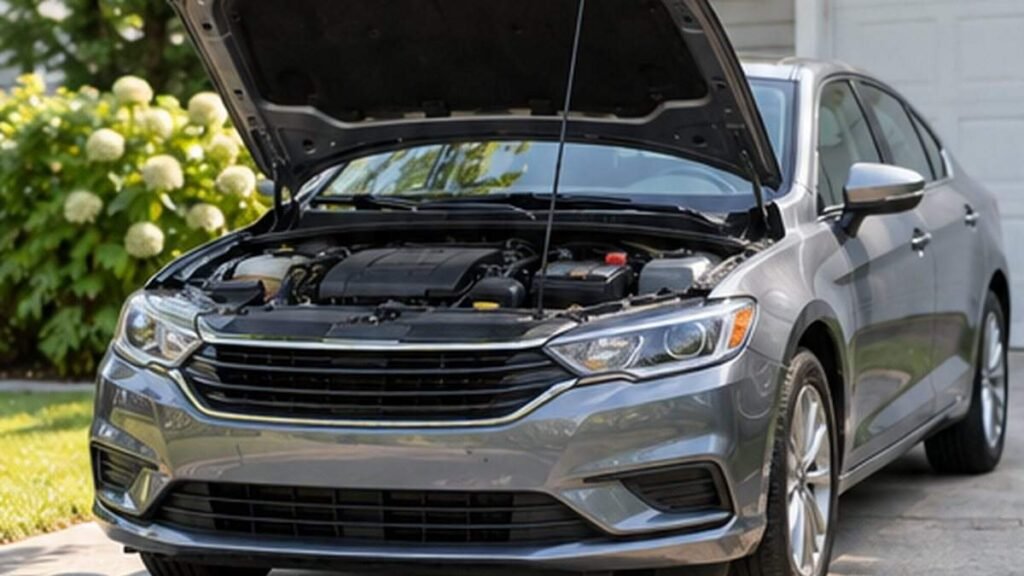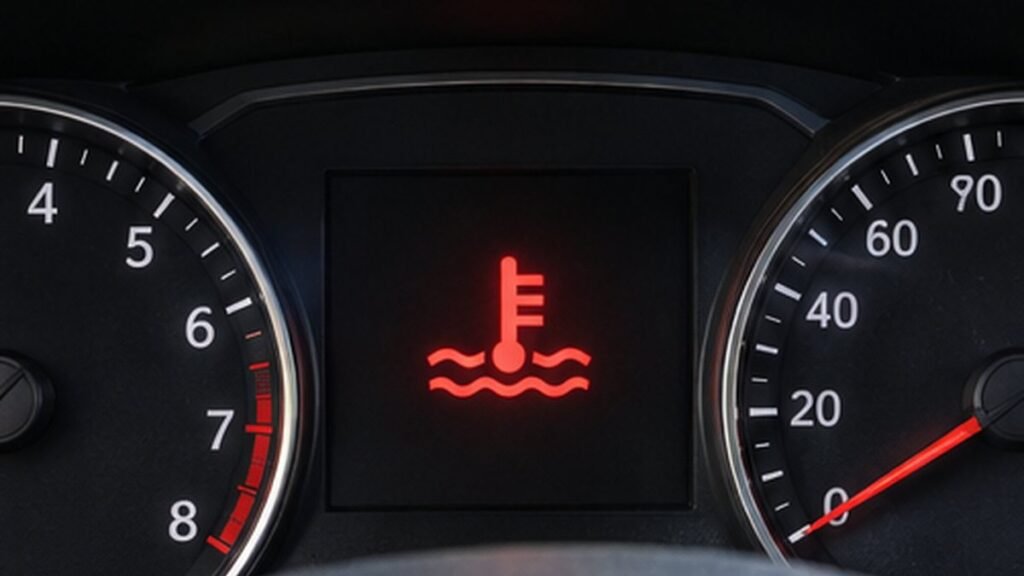
If your engine temperature warning comes on or steam appears, pull over as soon as you can safely do so and switch off the engine. If you're exposed to traffic, follow local roadside emergency guidance. Call for roadside help and tell them whether you saw steam or leaking fluid.
| What happens | What to relay |
|---|---|
| Temperature warning without visible steam | Exact message and conditions before it appeared. |
| Steam or visible coolant loss | Tell roadside assistance and keep clear of hot parts. |
| Warning returns after cooling | Tell the shop the warning recurred and arrange assistance. |
Keep clear while the system is hot
Do not open a hot radiator or coolant reservoir cap. Pressurized coolant and steam can cause serious burns. Keep your distance if steam is escaping, and follow the owner's manual before opening the hood. Avoid leaning over the engine bay or trying to refill it on the roadside while it is hot.
Check the display before shutting down only if it's safe to do so. An exact warning message or photo taken after stopping can be useful. Record whether the temperature climbed during stop-and-go driving, while towing, on a long grade or immediately after service. The timing can help the shop plan its inspection.
Ask the shop to test before replacing parts
Cooling systems can overheat from coolant loss, airflow problems, a thermostat, pump or other faults. A puddle or smell may be a useful clue, but the location under a parked car doesn't prove where the leak began. A technician can check the system when safe, inspect for leaks and determine how the fans and coolant circulation are behaving.
Consider two examples. A warning at idle that clears while moving gives the shop a different lead from a warning that appears on every long climb. A warning that disappears after cooling does not establish that the cause is gone. Follow roadside advice and the manual before attempting to drive again.
Tell roadside assistance where you are
Give a direction of travel and a nearby exit or mile marker. Share the make, model and whether the vehicle has all-wheel drive, hybrid or electric power so dispatch can send appropriate equipment. If smoke or fire is suspected, move to safety and contact emergency services.
After the tow
Give the shop the exact warning and the recent repair history. If the vehicle recently had cooling-system work, mention the date and whether heat from the cabin vents changed before the warning. A timeline can help the shop distinguish a recurring problem from a separate failure.
Can I finish the trip after the temperature falls again?
A falling gauge can mean the engine cooled temporarily. Follow the vehicle’s warning instructions and get roadside guidance before trying to continue. If the cause is coolant loss or a failed cooling component, the warning can return as the engine comes under load.
Sources
Featured and Web Story visuals are AI-generated editorial illustrations.