If your car's AC blows warm air, first work out whether the fan is moving air normally. Weak airflow and strong airflow at the wrong temperature lead a technician down different paths. Try the controls while safely parked, then write down what you observe.
| What you observe | What to record |
|---|---|
| Weak airflow at all fan speeds | Fan settings, vents affected and last cabin-filter service. |
| Strong air that stays warm | Outside temperature and whether either side cools. |
| Cold on the highway, warm in traffic | Speed and time when the change occurs. |
Run a simple control check
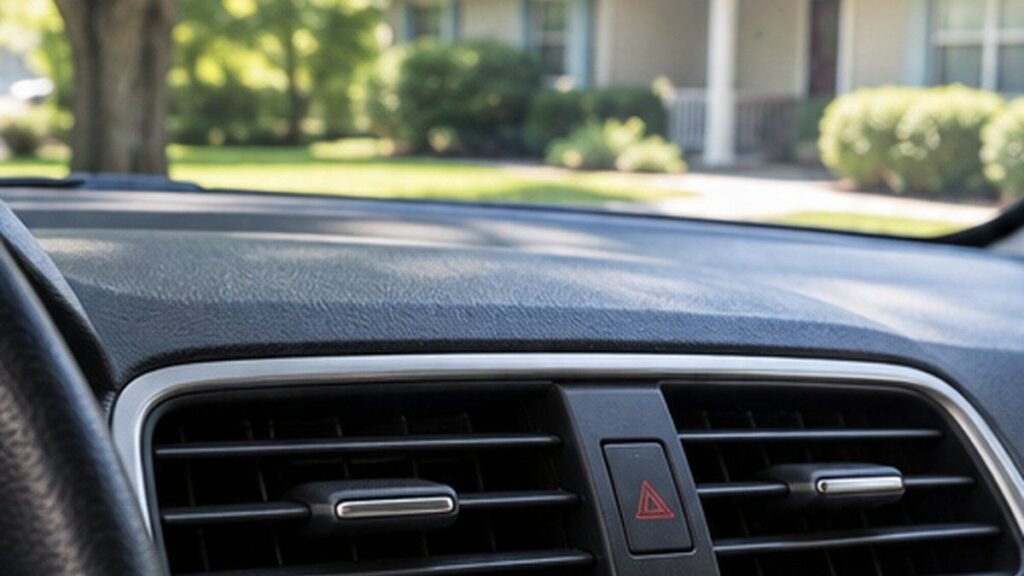
Set both temperature zones to cool, turn AC on and choose a medium fan setting. Check the center vents and compare left and right. If one side stays warm while the other cools, report that. A difference between zones gives the shop a clue about controls or air routing, among other causes.
If airflow is weak across fan settings, consult the manual for the cabin filter's service location and interval. A clogged filter can restrict airflow. If air blows strongly but remains warm, the filter alone is unlikely to explain the temperature. Record whether changing fan speed or selecting recirculation changes the result.
Record when cooling changes
Cooling that is poor in stopped traffic but improves while moving can point the shop toward airflow around the condenser or another operating condition. An AC system that cools for several minutes and then warms up has a different pattern. Note the outside temperature and when the problem appears. Keep hands clear of fans and belts and leave under-hood testing to a professional.
Refrigerant loss is one possibility, along with electrical, compressor or control problems. Ask the shop how it confirmed the cause and what leak check is included if refrigerant is low. Adding a can without a diagnosis can complicate the next repair, and systems use different refrigerants and service equipment.
Give the technician a specific description
Try “fan works on all speeds, both center vents are warm at idle, the system cools somewhat on the highway.” That description is more useful than “AC is broken.” If a temperature warning or steam appears, deal with the engine overheating first and pull over safely.
Before approving refrigerant work
Ask which refrigerant the vehicle uses and whether the shop found evidence of leakage. Have it describe the next check if cooling fades again. A written diagnosis and measured results give you a better record than a receipt that only says the system was topped up.
Can a cabin filter cause warm air?
A restricted filter can reduce airflow. If there is strong airflow and it still comes out warm on the cold setting, tell the shop that distinction. It helps the technician separate airflow from temperature and refrigerant questions.
Sources
Featured and Web Story visuals are AI-generated editorial illustrations.