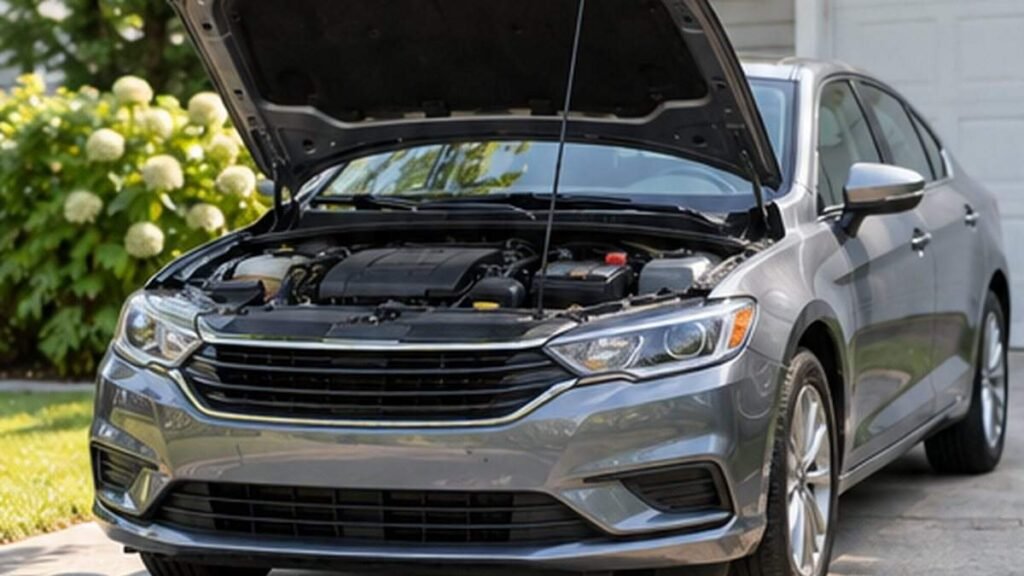
The most useful thing to notice about a vibrating car is when it happens. A shake that starts at one speed, a pulse only when braking and a shudder while sitting in Park point to different first checks. If the shaking is sudden, severe or comes with a flashing warning, impaired steering or weak brakes, pull over safely and seek assistance.
| When the shake starts | Useful details |
|---|---|
| At one road speed | Speed range and whether you feel it in the wheel or seat. |
| Only while braking | Pedal feel, grinding and whether the car pulls. |
| While idling in Park | Engine behavior and the exact warning light, if any. |
Shaking at a repeatable road speed
If the vibration comes on around a certain speed on several roads, tell the shop the speed range and where you feel it. A tire or wheel problem is one possibility, especially after a pothole, tire installation or lost wheel weight. A visual check from a safe spot can reveal an obviously flat tire, bulge or wheel damage. Do not drive on a visibly unsafe tire.
Shaking when you slow down
A pulse in the pedal or shake in the wheel only when braking merits a brake inspection. Tell the technician whether the pedal feels different and whether you also hear grinding. The shop can examine the brakes and nearby steering and suspension parts. A single symptom does not identify a specific rotor or axle.
Shaking at idle or under acceleration
A shake while stationary suggests the technician should consider causes that don't depend on road speed, such as how the engine is running or how it is mounted. If a check engine light flashes, stop safely and follow the manual. When the shake occurs only under acceleration, describe the speed, gear if known, and whether it stops as soon as you ease off.
Make a note before the appointment
Try “smooth in Park, starts near 55 mph even off the accelerator, strongest in the seat, began after hitting a pothole.” That tells the shop more than a broad request for an alignment. Share any recent repair and avoid trying to reproduce a dangerous shake on the road.
If you can only describe one detail
Choose the condition that reliably changes the vibration. For example, say whether it continues while coasting at the same speed or appears only when pressing the brake. Avoid taking your hands off the wheel or creating unsafe conditions for a demonstration.
What if vibration began after a wheel or tire change?
Contact the installer and report when it started, which wheels were serviced and whether steering or braking feels different. Have the shop check the fit and installation before assuming an alignment is the answer. Stop safely if the vehicle becomes hard to control.
Sources
Featured and Web Story visuals are AI-generated editorial illustrations.