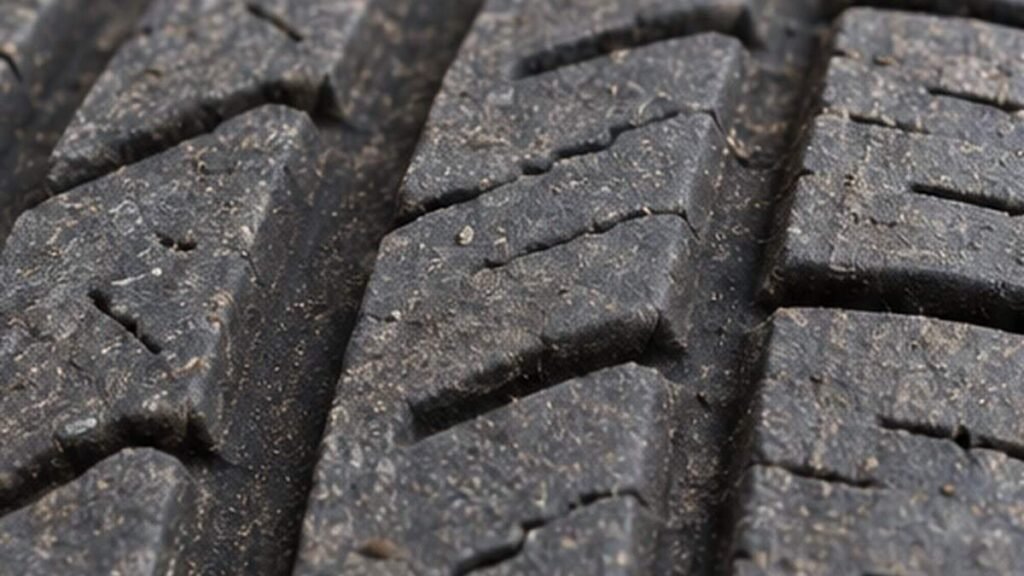
A tread-depth gauge gives you a reading you can write down and compare. Take measurements across each tire, at several points around the circumference, with the car parked securely. The shallowest usable groove matters more than the deepest spot you happen to find.
| Reading or finding | Follow-up |
|---|---|
| Main grooves near the wear bars | Check multiple grooves and plan replacement at the limit. |
| Center deeper than the inner shoulder | Ask a shop to measure and diagnose the wear pattern. |
| Bulge or exposed cords | Seek professional help regardless of the tread reading. |
Take readings you can compare
Use a gauge marked in 32nds of an inch. Set the gauge base flat on the tread and place its probe in a main groove, away from a raised wear bar. Check the inner, center and outer areas as safely accessible, and repeat around the tire. Record the position and lowest reading for each tire.
NHTSA says tires should be replaced when tread reaches 2/32 inch. Wear bars sit in the grooves and become level with the surrounding tread near the replacement point. A penny test is a rough screening method. With Lincoln's head pointed into the groove, seeing the top of his head is a warning that the tread is at or near the replacement threshold.
Compare the pattern before shopping
Suppose the middle of one front tire shows 5/32 but the inside reads 2/32. A center-only measurement would hide the more urgent wear. Ask a tire shop to inspect the tire and determine whether alignment, inflation, suspension or other factors contributed. Tread wear gives the shop a lead, and it still needs to inspect the vehicle.
Look for cuts, bulges, exposed cords and objects in the tread as you check. Visible structural damage can require immediate help, regardless of tread depth. Avoid reaching beneath the car to get a measurement. A technician can inspect hard-to-see areas.
Use conditions to set your own reminder
A tire can lose useful wet or winter performance before it reaches the minimum threshold. If you regularly drive through rain or snow, ask a tire professional about replacement timing for your use. Photograph the readings by position before a rotation so you can track the changes at the next check.
When a tire shop should take a closer look
Get help if you find a bulge, exposed cords, a major cut or fast pressure loss. Show the technician a photo or position of the damage if you can do so safely. A healthy-looking center groove tells you little about damage on the inner shoulder.
Is the penny test enough to check every tire?
A penny can flag shallow tread quickly. A gauge gives a number you can track and helps compare the center and shoulders. The tire also needs a visual inspection for damage that a tread measurement cannot detect.
Sources
Featured and Web Story visuals are AI-generated editorial illustrations.