An off-center steering wheel or uneven tire wear can point toward an alignment check. A vibration that comes on within a narrow speed range can point toward wheel balance. Both are starting clues. A damaged tire, worn suspension or bent wheel can mimic either problem, so describe the symptoms before paying for a service.
| Observation | First inspection to discuss |
|---|---|
| Steering wheel off center on level roads | Alignment and steering or suspension inspection. |
| Shake at one speed after tire mounting | Wheel condition, tire fitment and balance. |
| Uneven tread with a visible bulge | A tire safety inspection before driving farther. |
What an alignment changes
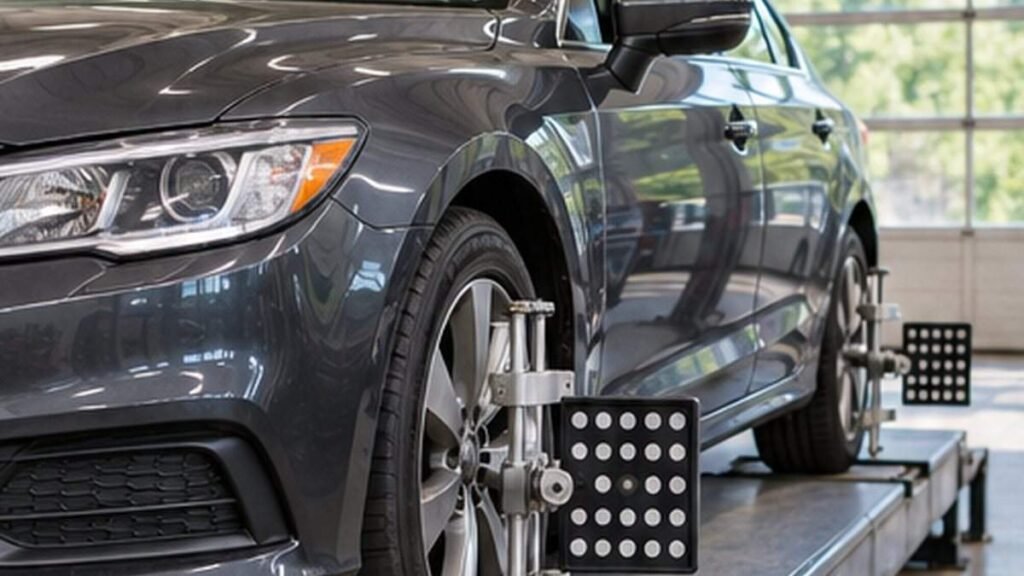
Alignment measures wheel angles and, where the vehicle permits, adjusts them to specification. A shop may inspect suspension and steering components first because looseness can prevent the adjustment from holding. Ask for before-and-after readings and which angles were adjustable. One-sided wear already in the tread will remain after the angles are corrected.
A car drifting gently toward the edge on a crowned road is a different observation from a strong pull on multiple roads. Start by checking cold tire pressures and telling the shop if the problem began after hitting a pothole or curb.
What balancing changes
Balancing finds weight imbalance in a tire-and-wheel assembly. A technician places small weights where the machine indicates. A recent tire mount, lost wheel weight or vibration at a repeatable speed makes balancing a reasonable check. If vibration persists, ask about wheel damage, tire out-of-round conditions or another source before paying for repeated balances.
Make a note such as “shake starts near 60 mph, fades as I slow, and feels strongest in the seat.” For an off-center wheel, note whether the car tracks straight or pulls. Avoid deliberately recreating severe vibration or testing at an unsafe speed.
Match the shop's next step to the symptom
If the shake began after a tire installation, ask the installer to inspect fitment and balance. If a curb hit left the wheel visibly damaged or the car unstable, stop driving and seek help. If wear develops gradually, ask the shop to check tread across each tire and inspect steering and suspension as part of the alignment decision.
How to judge the result after service
Ask for the before-and-after readings or the balance work performed. During normal driving, note whether the original symptom improved on the same type of road. If the shake or pull remains, return with your notes and ask about the next diagnostic check.
Will an alignment make old tire wear disappear?
An alignment may correct wheel angles that contribute to wear. The existing tread pattern stays until the tire is replaced, and the shop should inspect whether the remaining tread is safe. Ask what caused the wear and what will be monitored afterward.
Sources
Featured and Web Story visuals are AI-generated editorial illustrations.