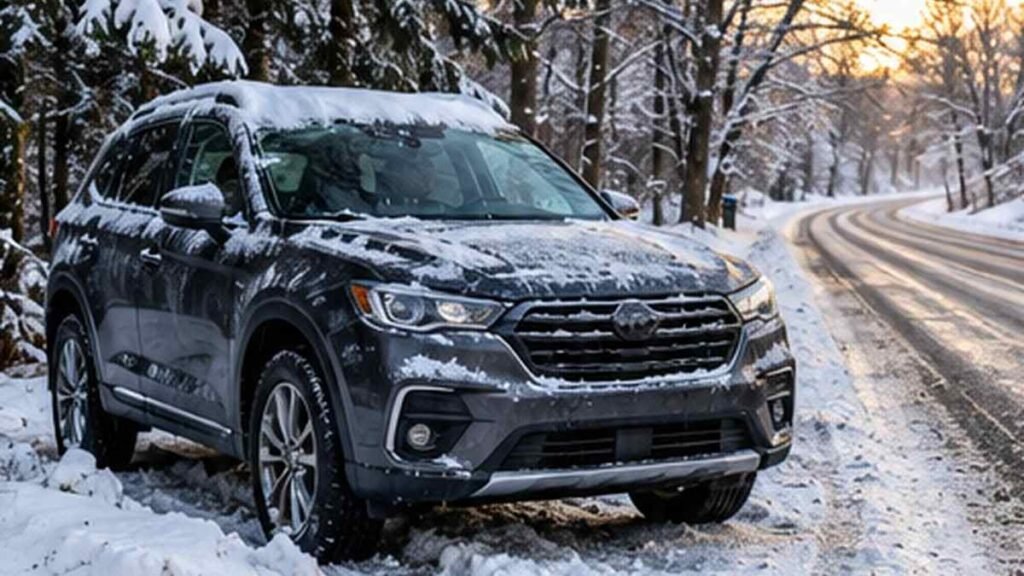
If your route regularly includes packed snow or ice, dedicated winter tires are worth a close look. If you live where roads are usually clear and you can stay home for rare storms, an appropriate all-season tire may suit your routine. Think about your worst regular commute and how much flexibility you have when the forecast turns.
| Typical route | What to compare |
|---|---|
| Frequent packed snow on a hilly commute | Compare dedicated winter models and independent snow and ice tests. |
| Mostly clear roads with occasional snow | Compare suitable all-season or severe-snow-rated all-weather tires. |
| Occasional mountain trips | Check the route’s traction equipment rules before leaving. |
Read the sidewall with the right expectation
M+S is a marking you may see on all-season tires. The three-peak mountain snowflake symbol indicates a tire met a standardized snow-traction threshold. It does not, by itself, tell you its ice braking, wet braking or handling performance. Some all-weather and all-terrain tires also carry the snowflake.
A dedicated winter tire is built around cold-season conditions. Its tread pattern and compound are intended for that use, and the manufacturer may recommend switching back as conditions warm. If you choose a seasonal set, include installation, storage and any second set of wheels or compatible pressure sensors in the cost.
Compare actual routes
A driver who leaves before plows clear a hilly route faces different demands from someone who can delay a trip until highways are treated. A third driver who travels to mountain areas a few weekends a year should check route-specific chain or traction rules with the state transportation agency before leaving.
All-wheel drive can help a vehicle get moving, but braking and steering depend heavily on the tires and surface. Talk to a tire professional about a matched set that meets the size and load requirements for your car. Mixing tires with very different grip characteristics can affect handling.
Build a useful shortlist
Write down your exact tire size, the worst road conditions you encounter regularly and whether you have a place to store a second set. Compare independent tests for snow, ice and wet pavement in the same tire category when possible. Then check tread condition and cold pressure throughout the winter. A tire's label cannot compensate for severe wear or underinflation.
Questions to ask when buying a set
Give the shop the size and load index from the vehicle's specifications. Ask what local testing or ratings support the recommendation, what cold pressures to use after installation and what happens if a tire in the matched set needs replacement midway through the season.
Do I need four winter tires on a two-wheel-drive car?
Ask a tire professional about four matched tires and use the carmaker’s guidance. Grip at the steering and braking wheels matters along with drive-wheel traction. A mixed set with substantially different grip can change how the car responds when a road turns slippery.
Sources
Featured and Web Story visuals are AI-generated editorial illustrations.