Updated October 31, 2026. US information; schedules and availability may change.
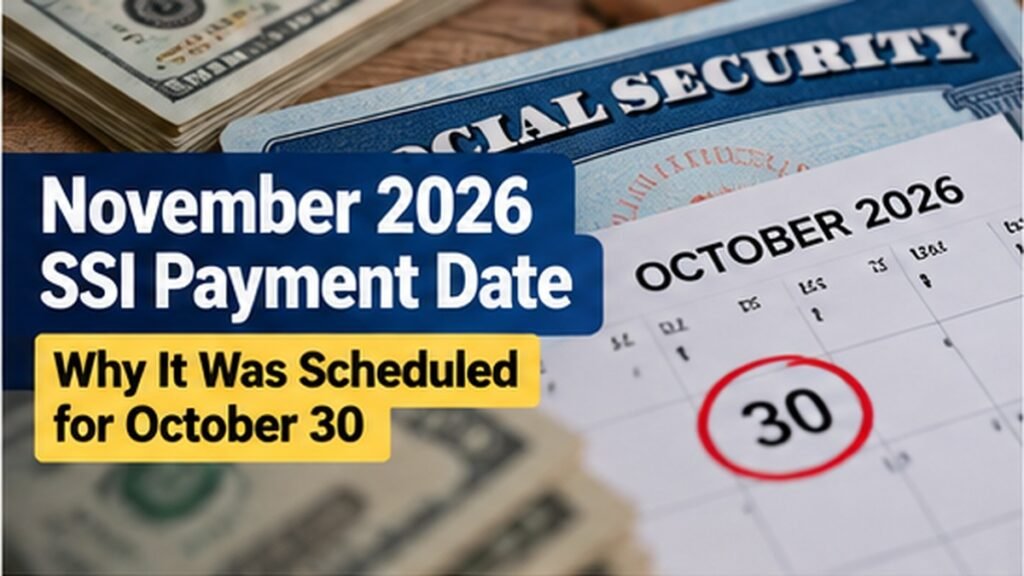
If you receive Supplemental Security Income and see no SSI date inside November on the Social Security Administration’s 2026 calendar, the explanation is the calendar, not a missing extra benefit. The payment for November was scheduled for Friday, October 30, because November 1 falls on a Sunday.
Why the date moved
SSI is normally scheduled for the first day of the month. When that date falls on a weekend or federal holiday, the payment is scheduled for an earlier business day. SSA’s published calendar marks SSI payments on October 1 and October 30, 2026, and none on November 1.
Is the October 30 payment a bonus?
No. Two SSI calendar dates in October do not mean two November benefits or an extra check. The October 30 date is the November payment arriving ahead of its usual first-of-month date. Budget for the longer stretch until the next scheduled SSI date.
SSI and Social Security are different schedules
People who receive Social Security retirement or disability benefits may have a separate payment date, often based on their birth date or benefit history. If you receive both, check the applicable rows in SSA’s official calendar instead of assuming all payments moved to October 30.
What if a deposit is missing?
First check your bank or card balance and the official benefit notice. Processing and posting times can differ. If a scheduled payment has not arrived, use SSA’s official account or contact channels for your particular benefit. Do not share bank numbers or a Social Security number with a social-media account claiming it can speed up a payment.
The short answer
The November 2026 SSI payment was scheduled for October 30, 2026, because November 1 is Sunday. The early date changes timing, not the monthly benefit amount.
Sources and updates
Check the original source for any changes: official source.